ASYLUM AMICORUM
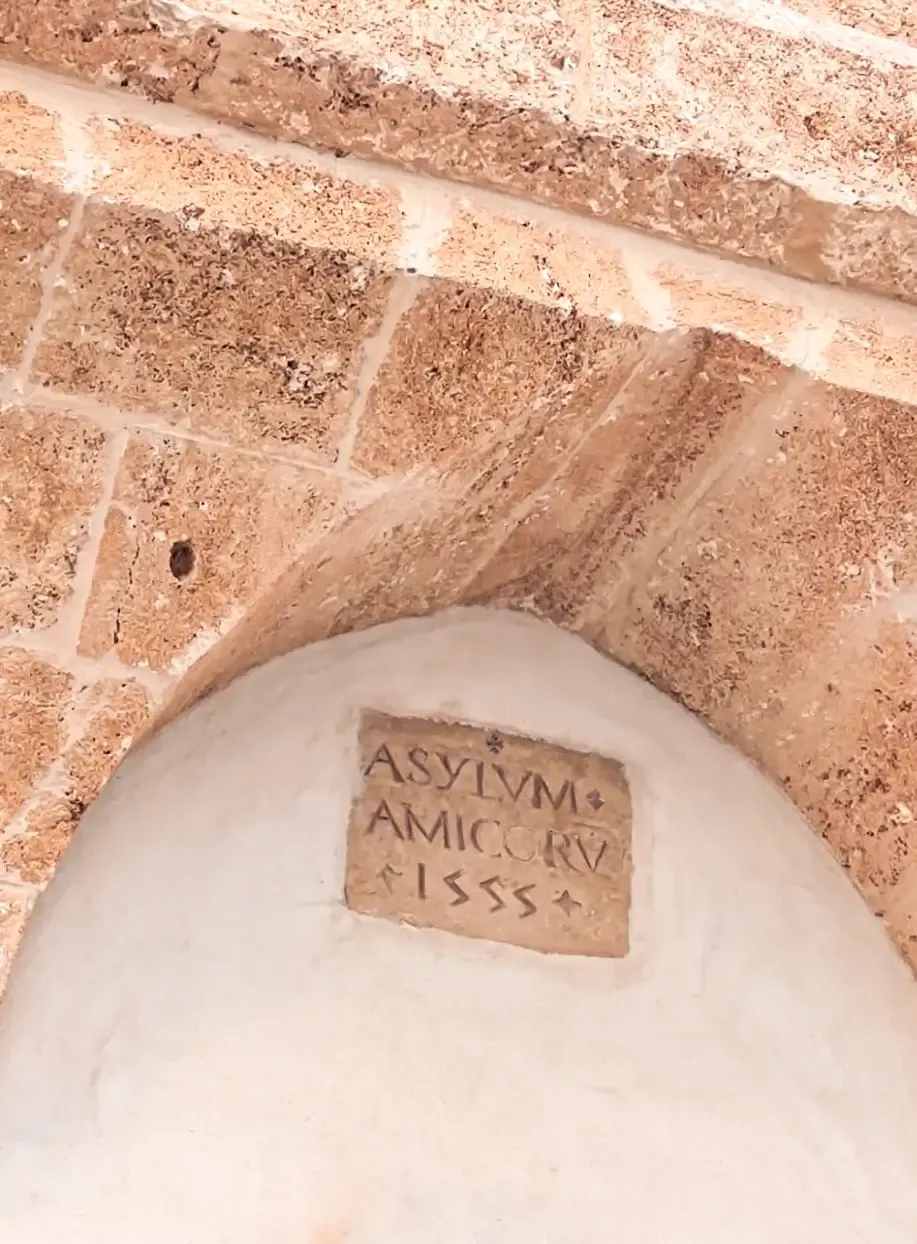
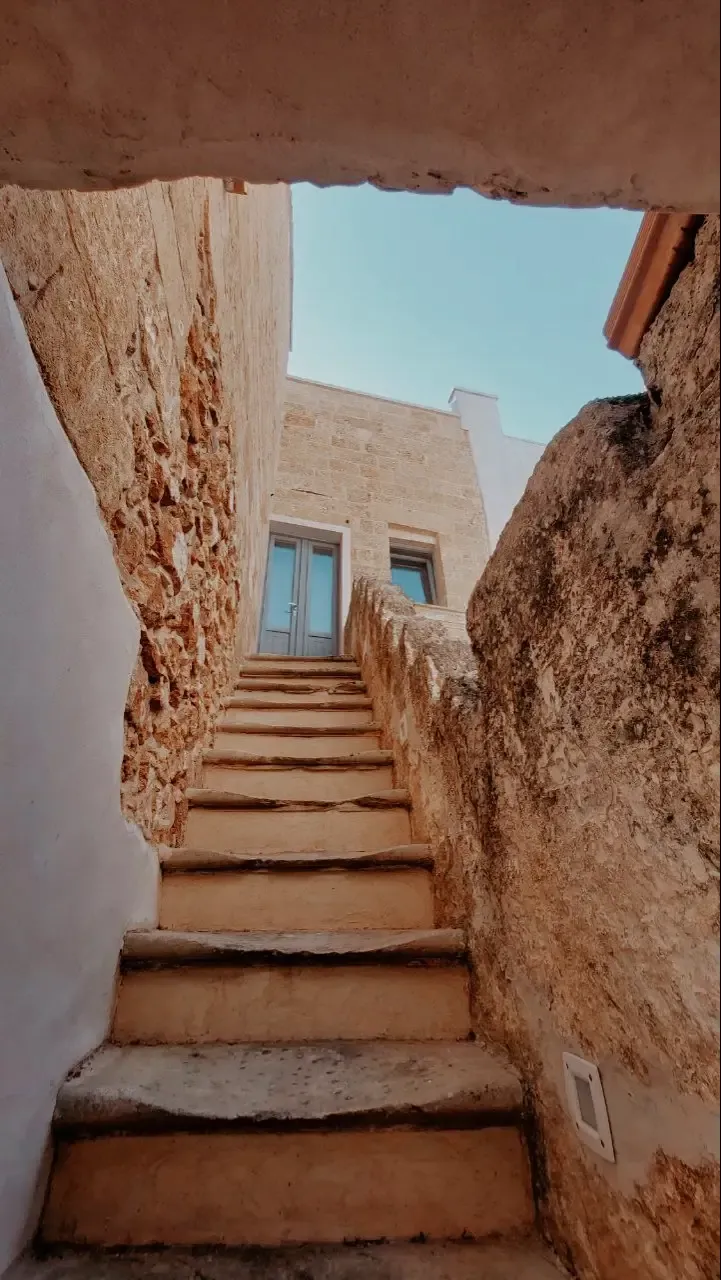
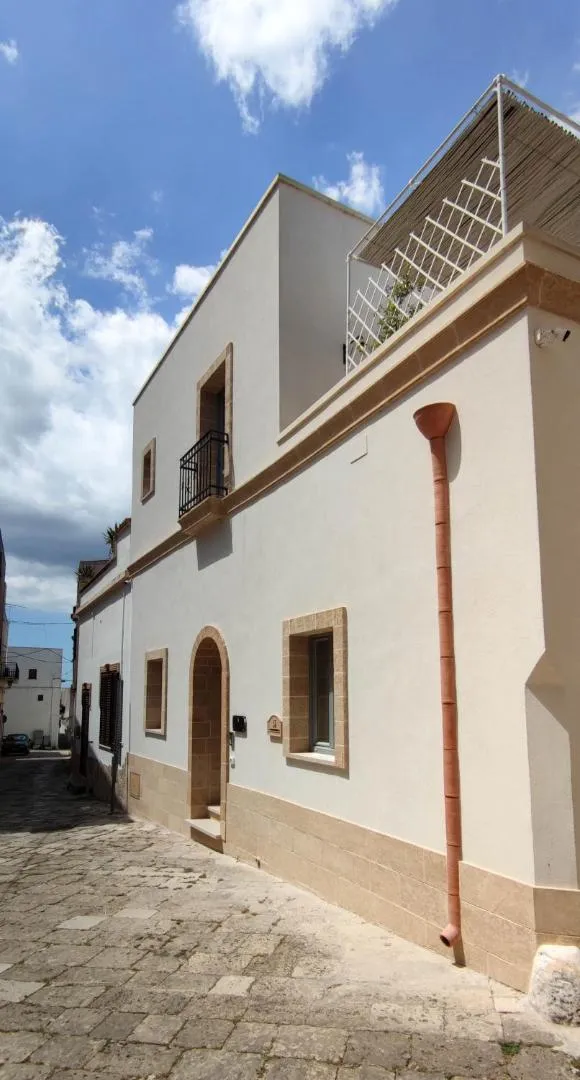
Probably the oldest buildingin Gagliano del Capo,built in 1555 as a refugefor pilgrims.
The name has been carved into the entrance stone for more than five hundred years: ASYLUM AMICORUM, the refuge of friends.
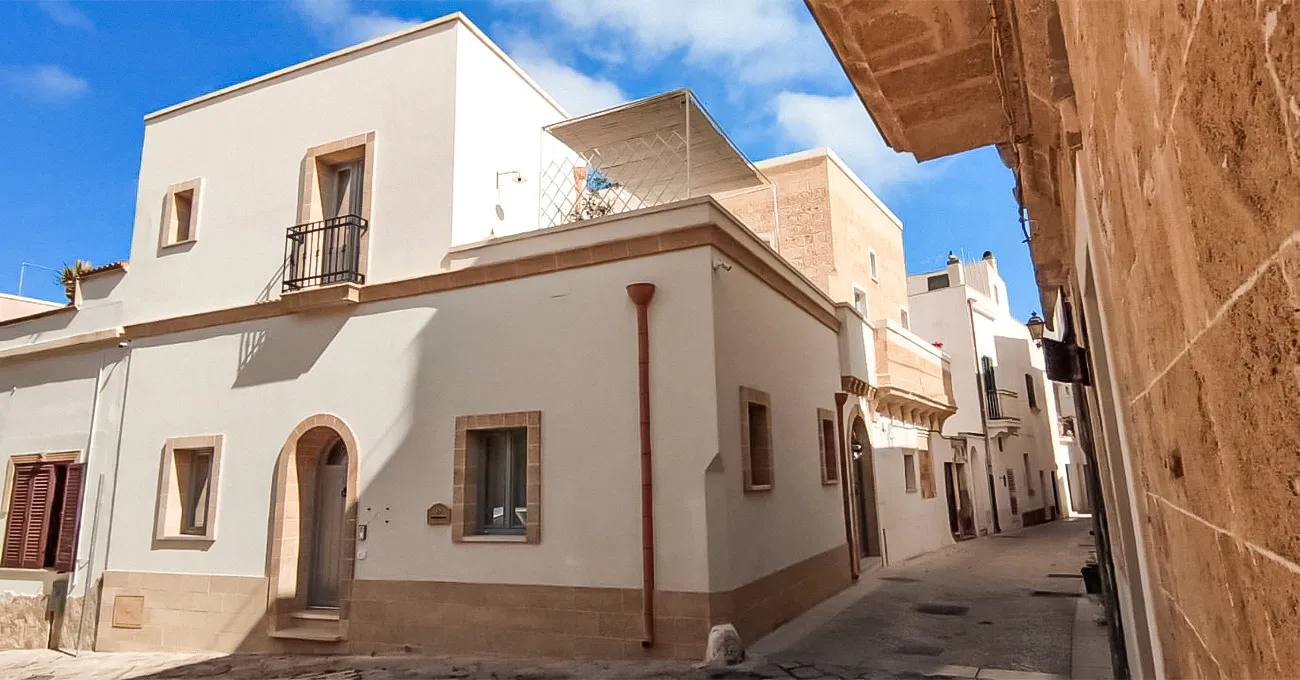
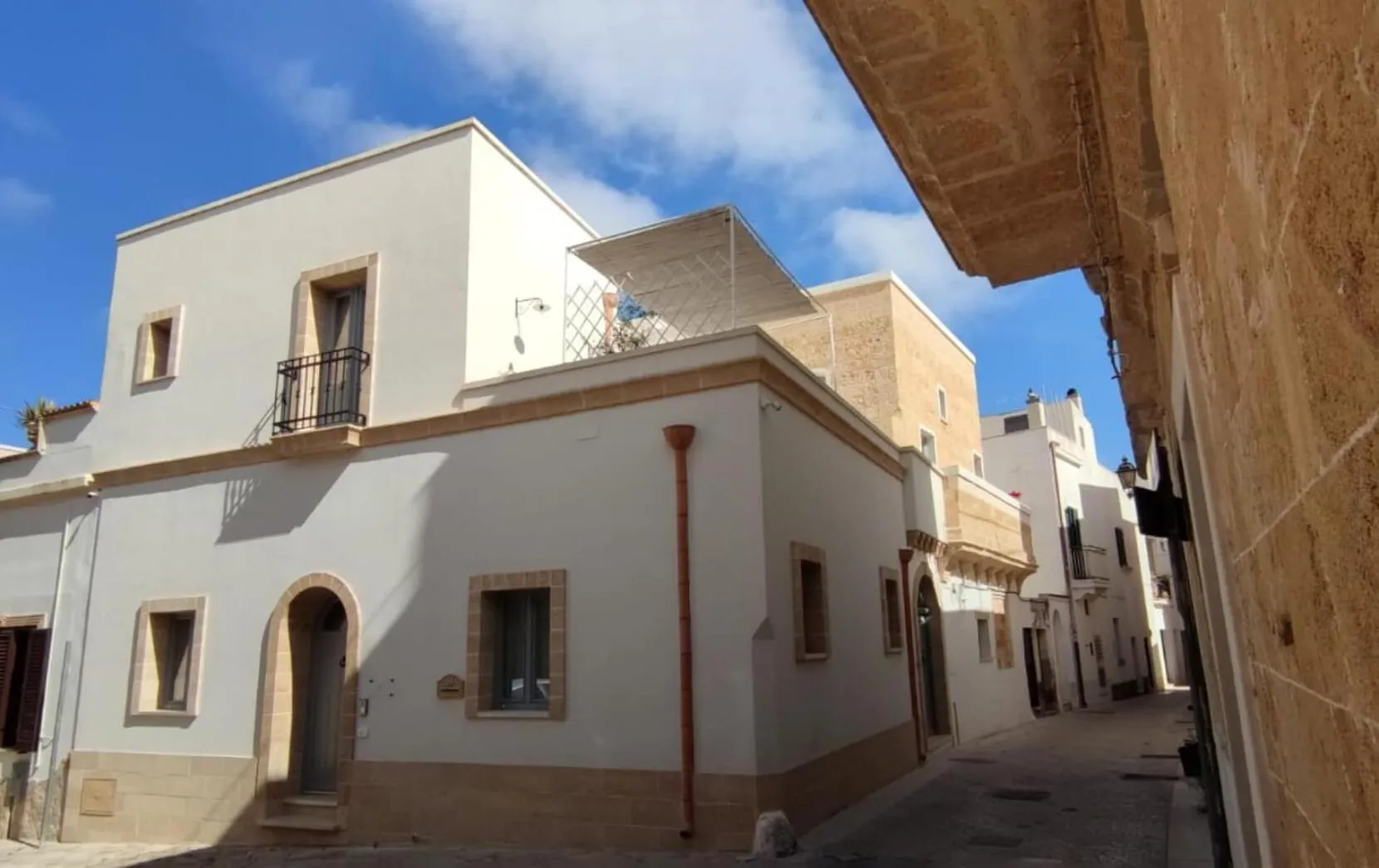
In the heart of the old town, the door opens onto a silent lane a few steps from the square.
A refuge on the viaFrancigena, since 1555
The building was raised in 1555 as a shelter for the PILGRIMS walking the via Francigena towards the sanctuary of Santa Maria di Leuca, the De Finibus Terrae: the point at which, for anyone on foot, the land ran out.
It is probably the oldest building in Gagliano del Capo.
Vince in bono malum— overcome evil with good
Redoing the facade uncovered a number of LATIN INSCRIPTIONS, brought back to view once the old layers of lime were stripped away. The first reads “Vince in bono malum”, part of the longer line “Noli vinci a malo, sed vince in bono malum”: do not be overcome by evil, but overcome evil with good.
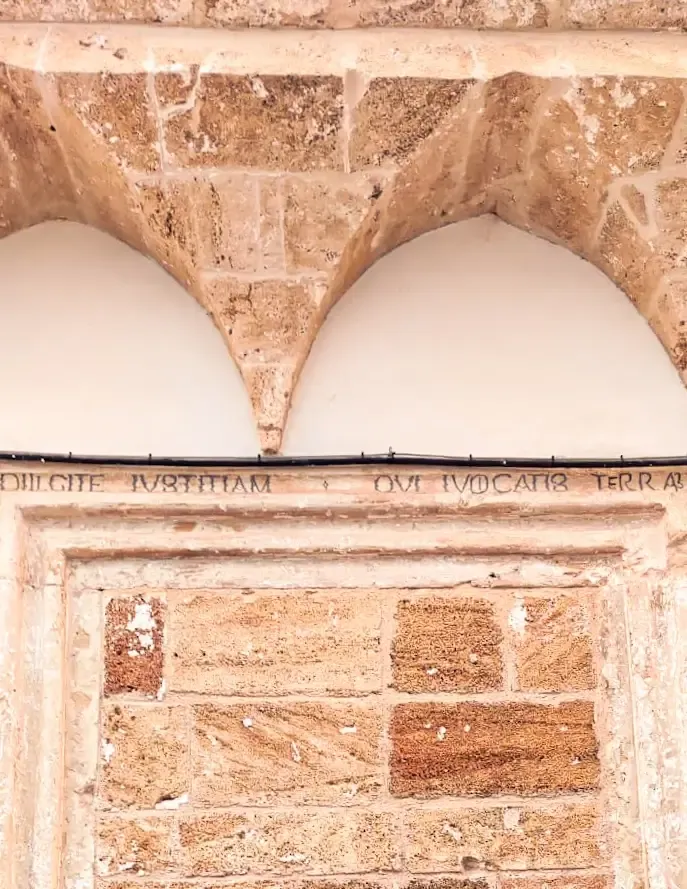
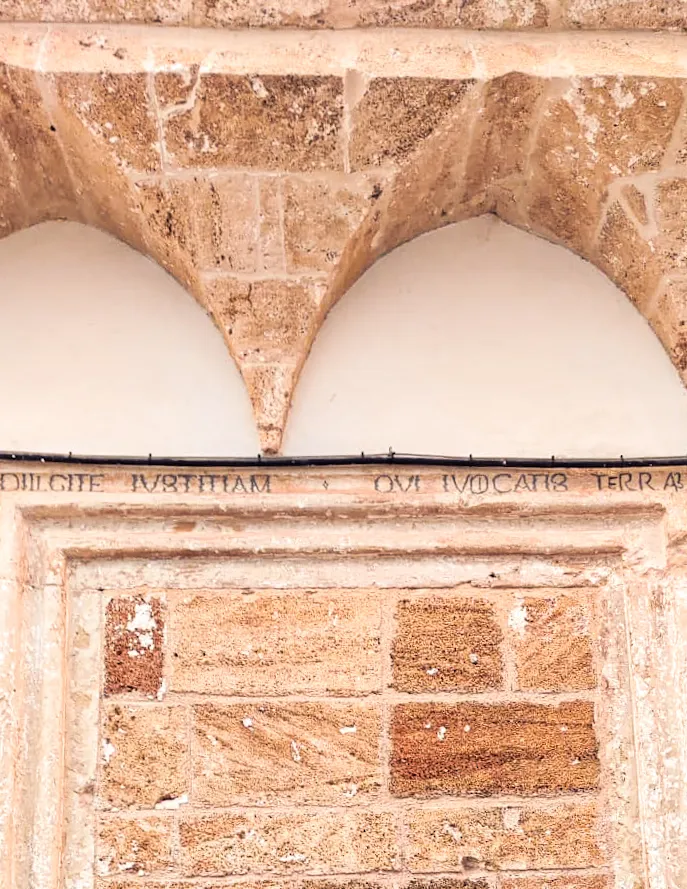
Diligite iustitiam quiiudicatis terram
On the lintel of the window beside it, the second carving: “Diligite iustitiam qui iudicatis terram” — love justice, you who judge the earth. The Old and New Testaments are the original sources of these inscriptions, most probably suggested by clergy of the time (A. D. 1555).
Restored in keeping withthe architecture of its time
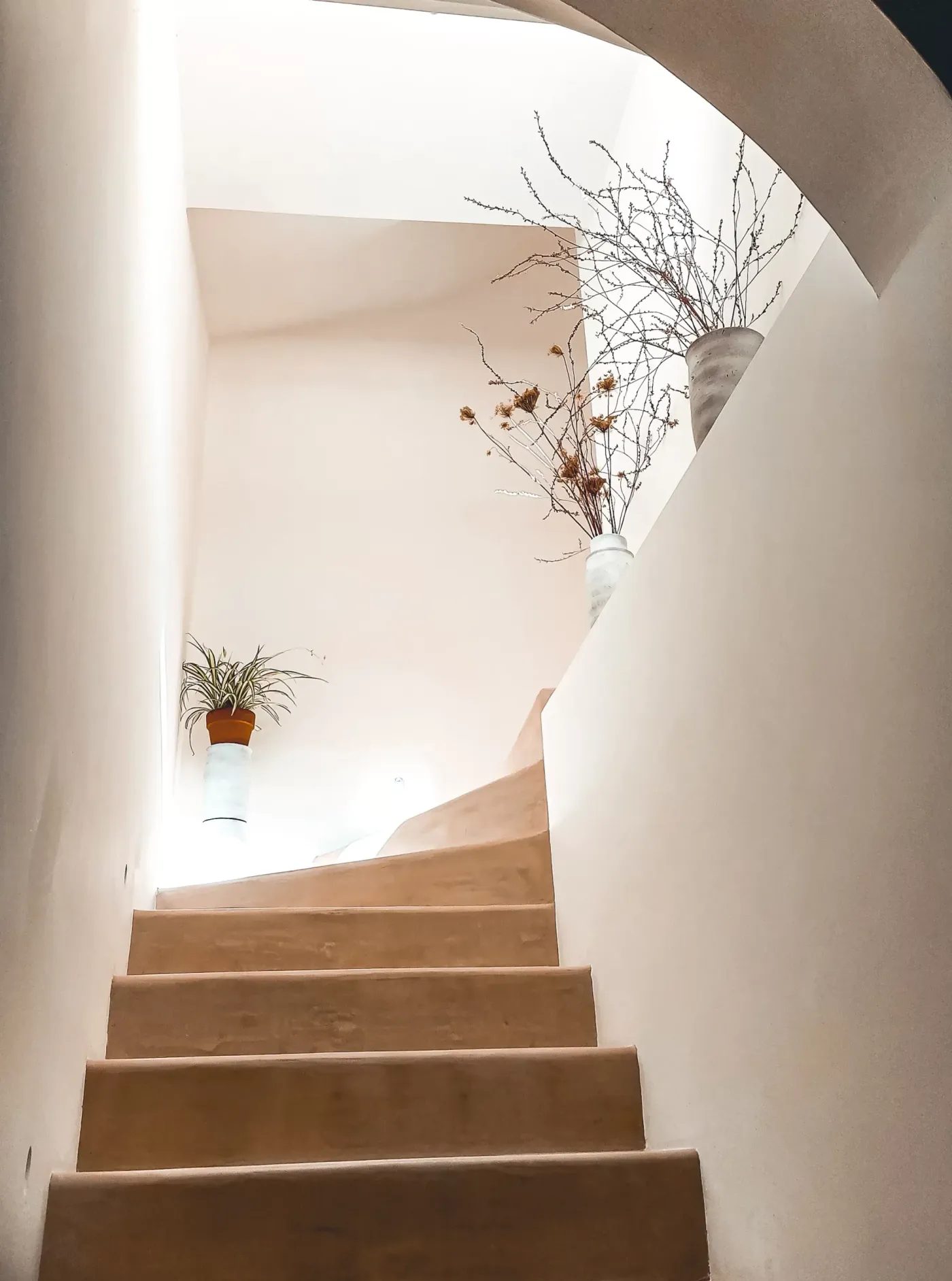
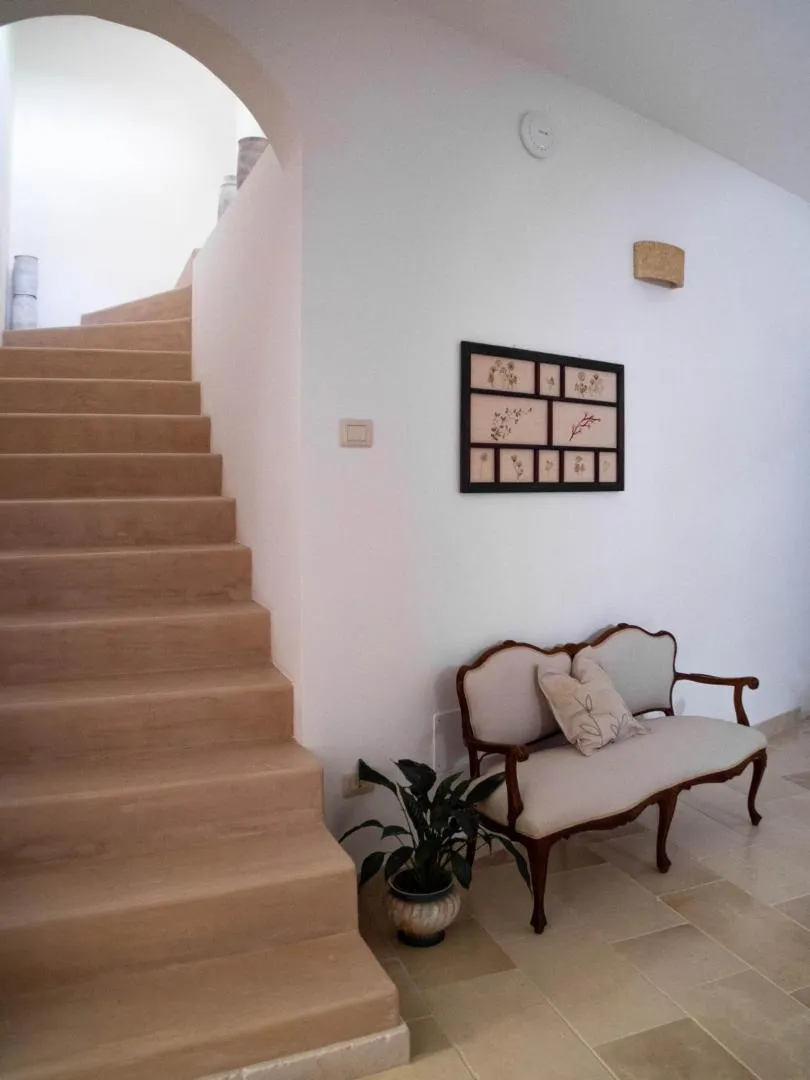
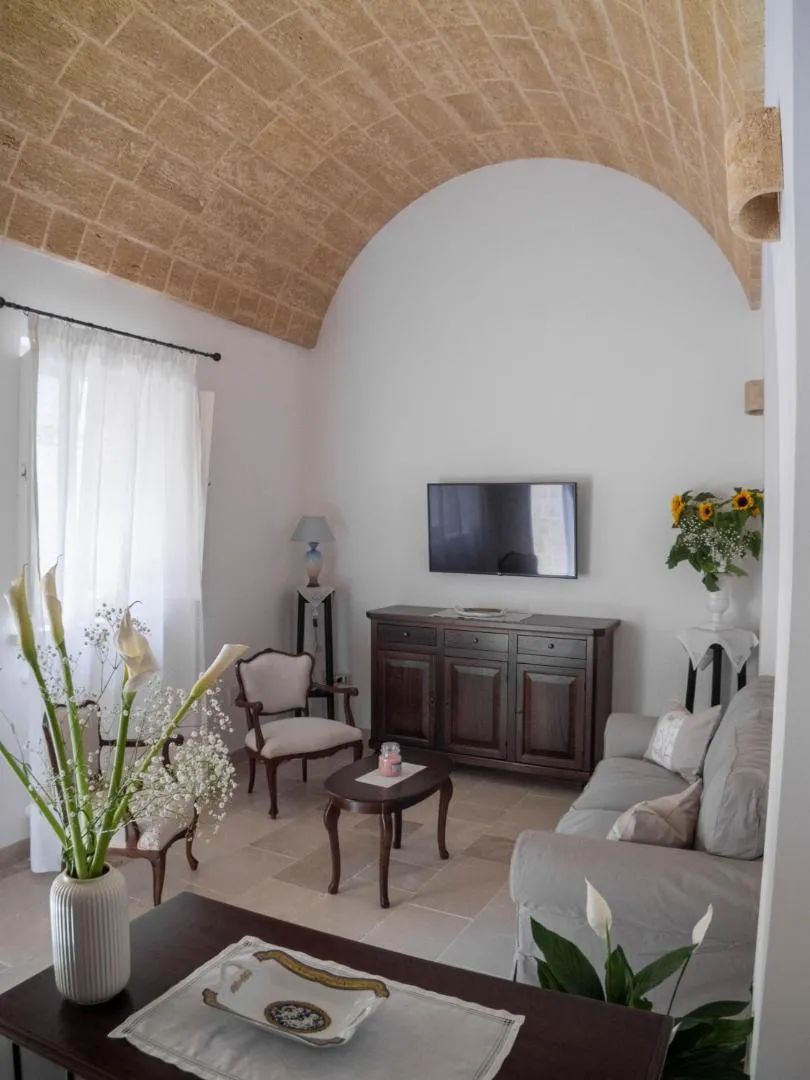
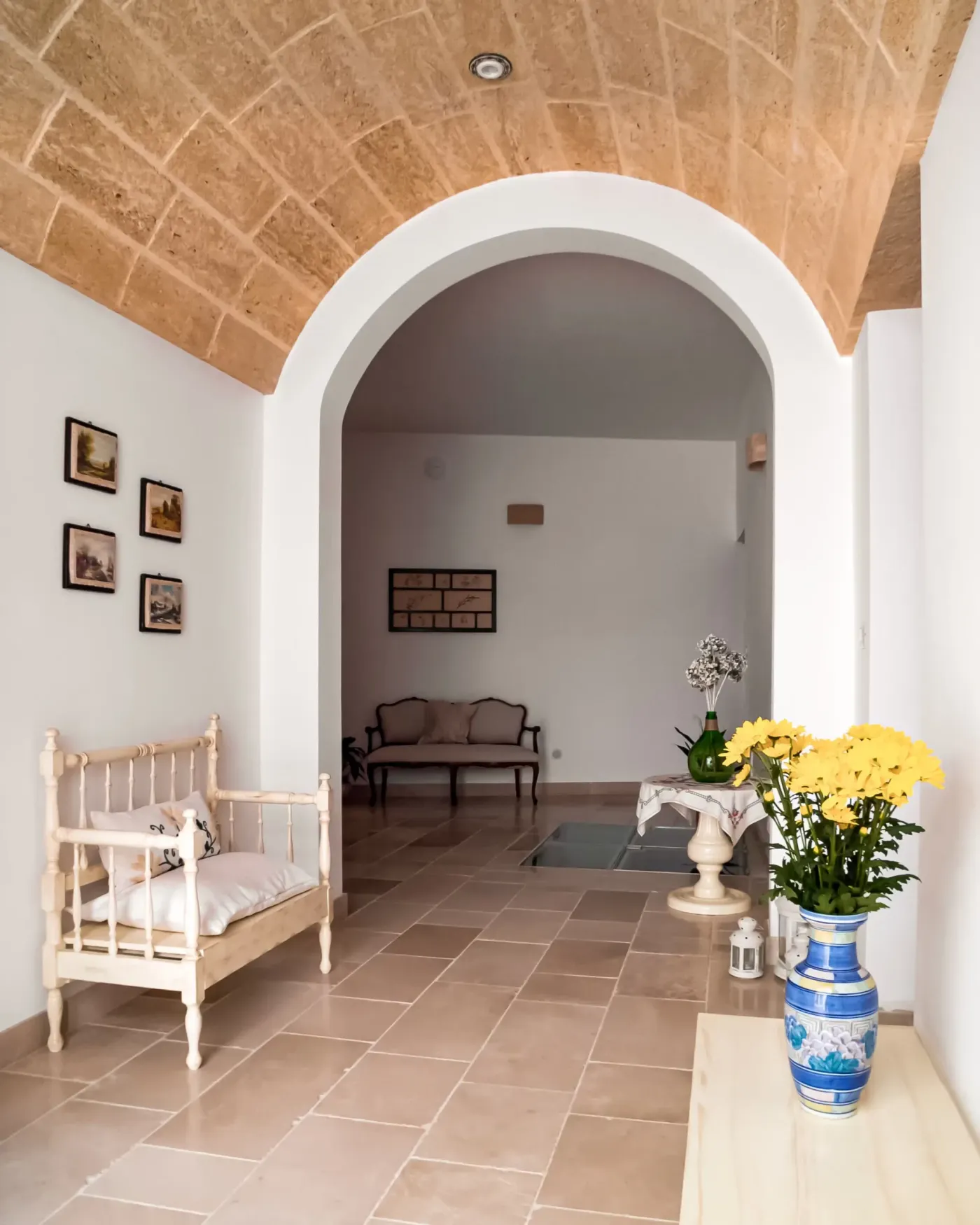
The building was fully restored keeping elements such as the STAR VAULTS and the capitals, and the spaces still follow the original shape of the structure.
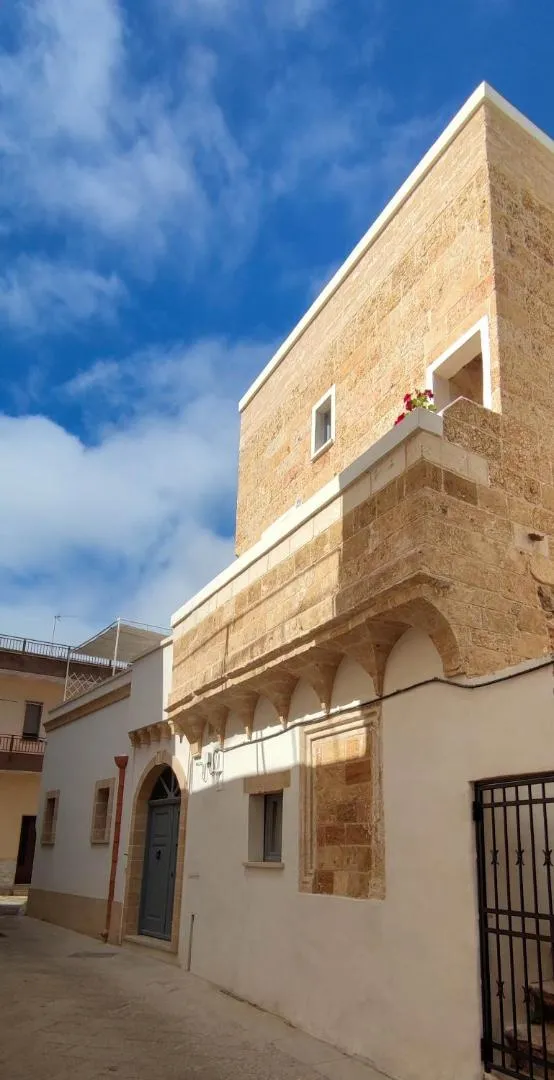
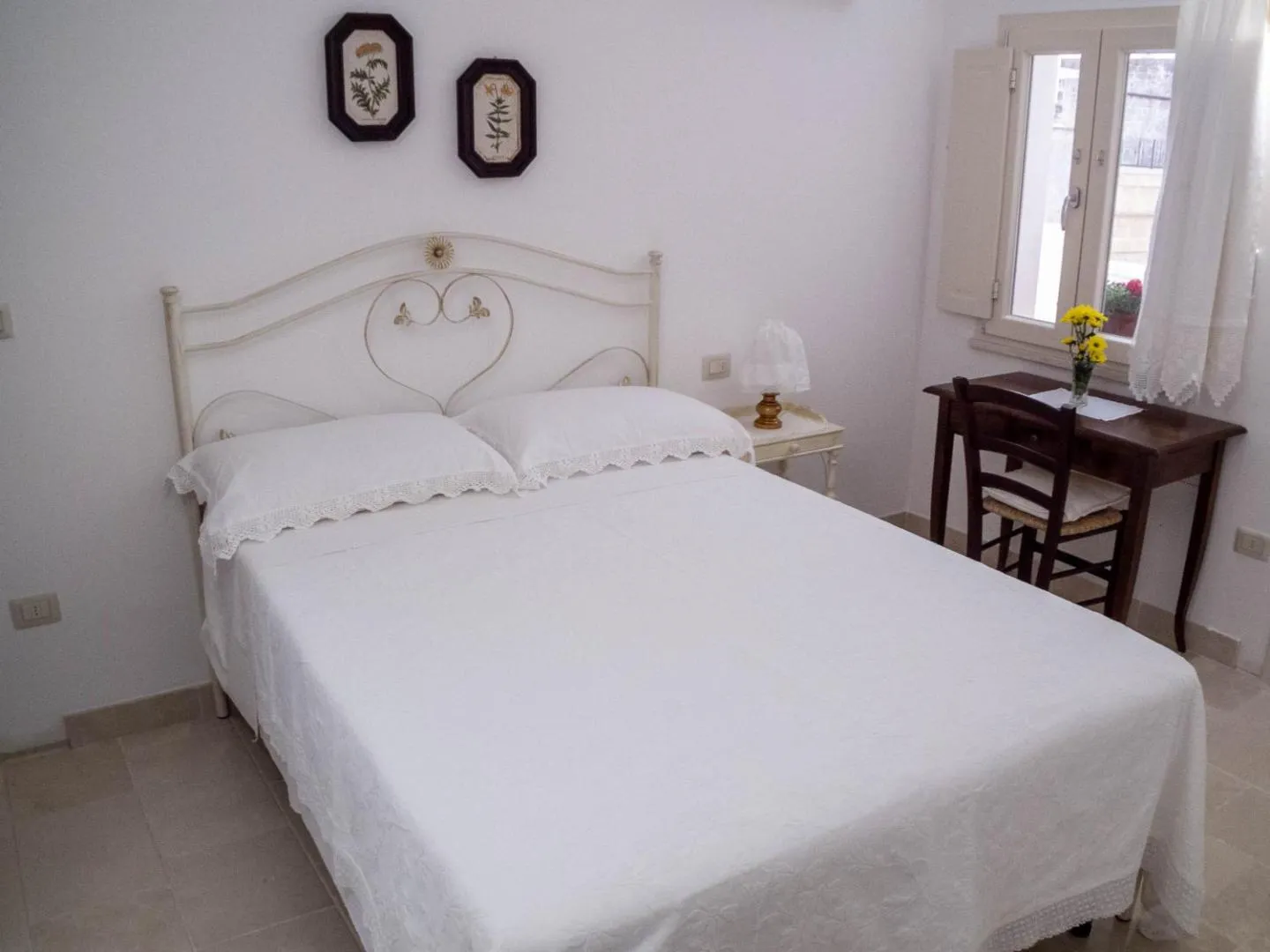
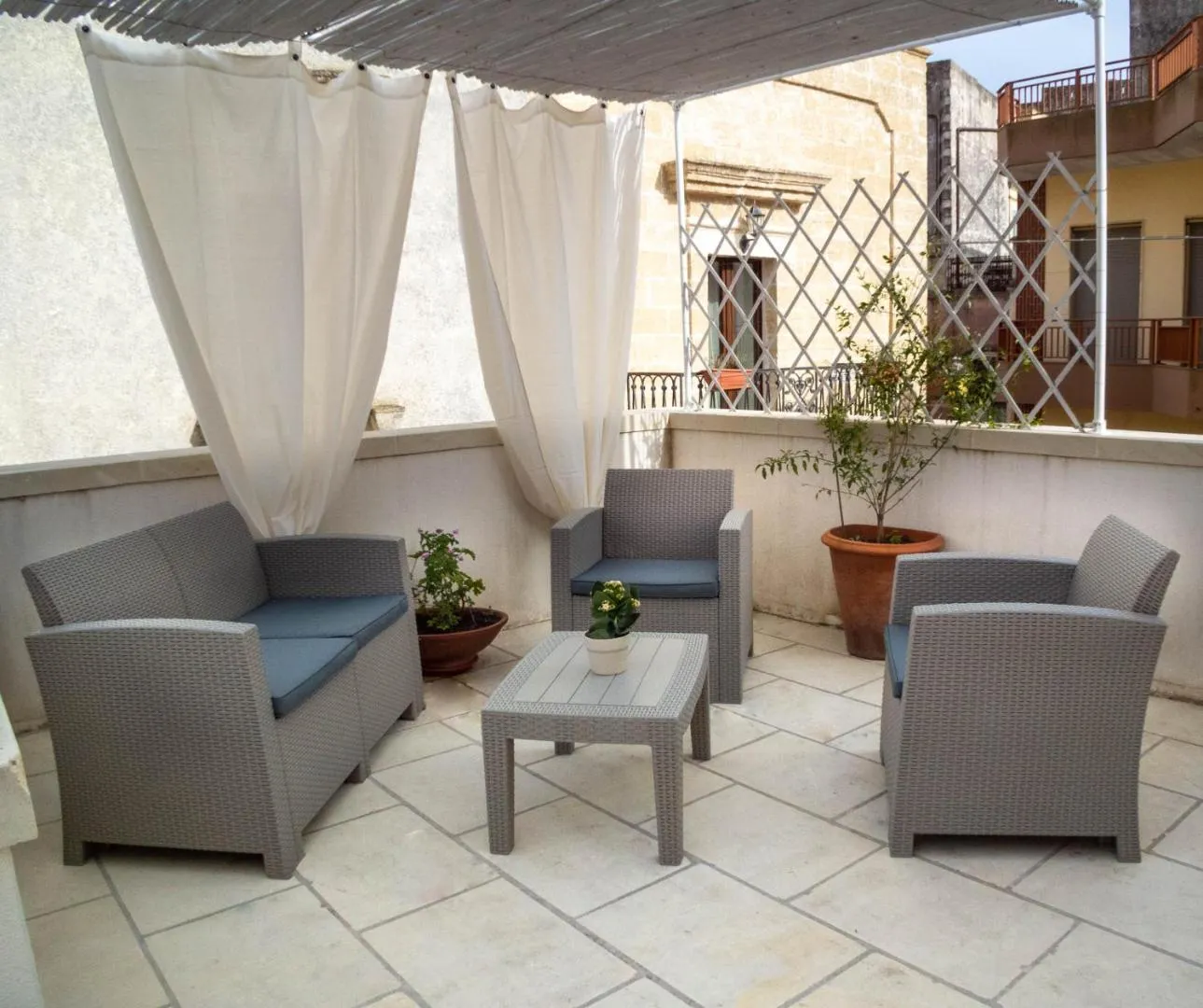
The rooms interlock with one another, A GAME OF JOINTS, and in doing so they make two large terraces: it was the sixteenth-century plan that drew them.
Beneath the house,an ancient well
During the works an ANCIENT WELL came back to light, hidden for centuries. It is one of the surprises a five-hundred-year-old house keeps in reserve.
On the walls of the common rooms we have hung historic photographs of Gagliano del Capo: the town as it was, for the people walking through it today.
The beauty of simplicity
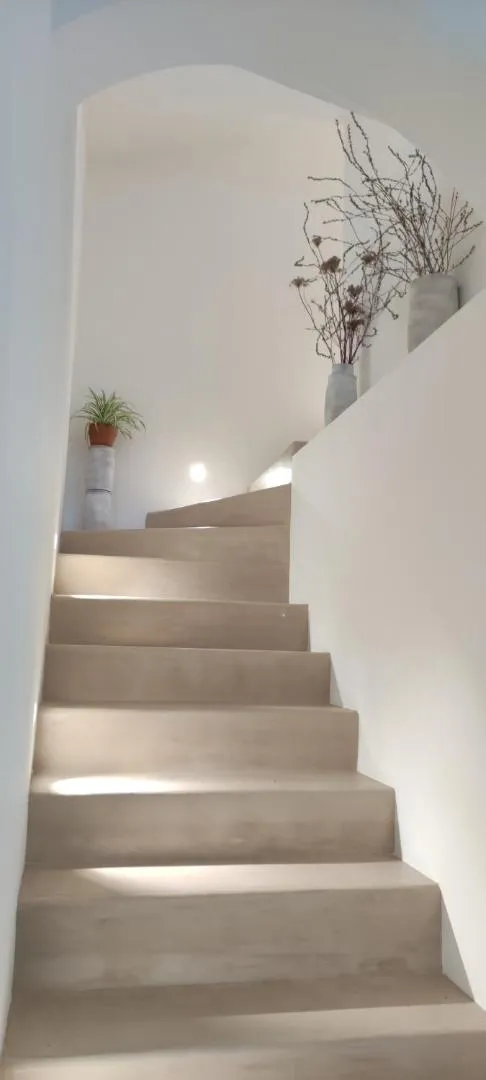
The furnishings carry pieces of the Salento tradition. Nothing showy: bare stone, wrought iron, white lime and the light coming through the high windows. The same sense of measure held by the people who built this house.